From production line to plate
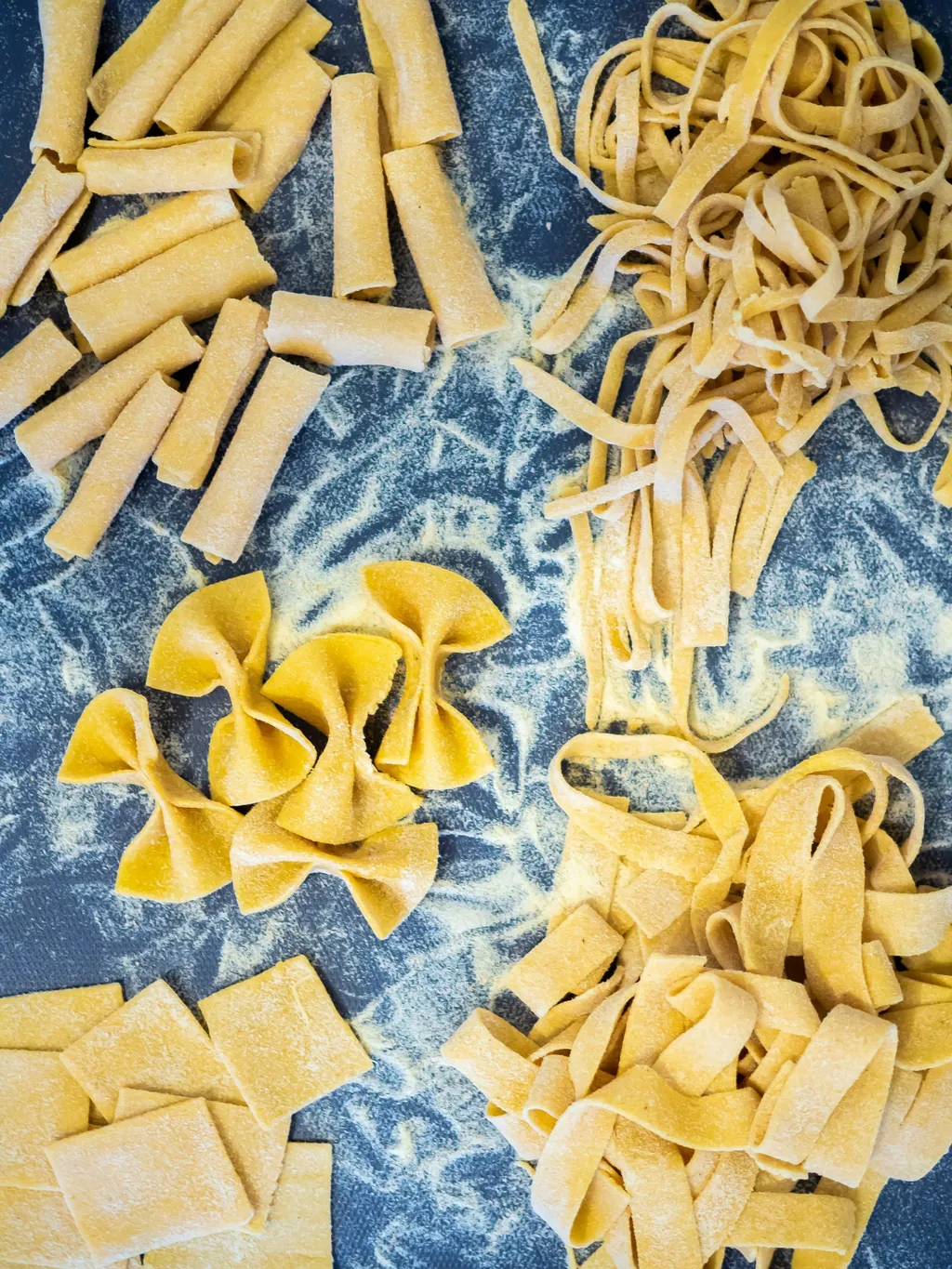
Choice of semolina, bronze-die extrusion, slow drying, bite and regional shapes are production decisions that carry a cost and make a real difference on the plate. The same goes for rice, with its varieties, ageing and suitability for particular dishes, and for grains and flours, where origin and milling matter.
Many of these terms have established English equivalents, but readers do not always grasp what they imply. Buyers look for industry terminology; consumers want to know what difference it makes when they cook.
Importers and buyers also need clear, comparable information: available shapes, cooking times and the origin of raw materials. A well-organised product sheet supports their decision as much as a good story does.
We help you communicate the qualities of your products with content that brings out what makes them distinctive, explaining shapes, cooking methods and pairings rooted in Italian food culture.
The right words make all the difference
Italian
Trafilata al bronzo ed essiccata lentamente, ha una superficie ruvida che trattiene il condimento.
English
Bronze-die extruded and slowly dried, with a textured surface that holds the sauce beautifully.
The choice
The English links the process to its result on the plate: holds the sauce beautifully tells readers what changes when they cook, not just how the pasta was made. Bronze-die extruded is the most precise technical wording; bronze-cut and bronze-drawn are also common on packaging. With pasta, the condiment is usually the sauce; seasoning generally refers to what is added for flavour, such as salt, spices and herbs, and would be less precise here.
Illustrative example, not taken from client work. More examples in The language of taste.
How we can help
Every project starts from your materials and the markets you want to reach. For this sector we work in particular on:
- Packaging copy and product sheets
- Pasta shape descriptions and recipes
- SEO localisation of e-commerce content
- Catalogues for importers and distributors
Discover all our translation and multilingual communication services.